|
News Code
101038
Copied
ICTSI sees ‘Birth pains’ in Melbourne, stiffer competition in PH
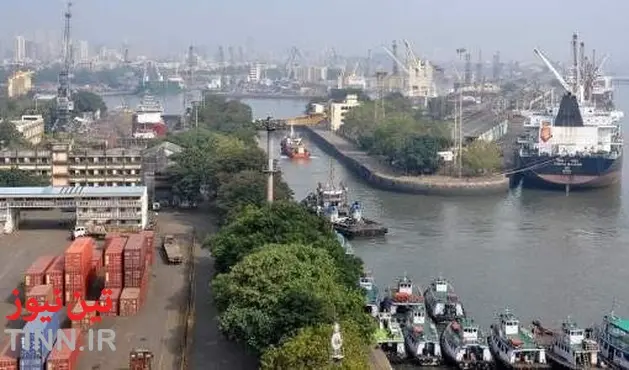
TIN news: International Container Terminal Services Inc. (ICTSI) is poised to challenge incumbent port operators and create a three-way market here, amid threats of competition back home.
Christian Gonzalez, senior vice president of ICTSI, head of the Group’s Asia-Pacific operation and chairman of Victoria International Container Terminal Ltd. (VICT), acknowledges the birth pains of being the new kid on the block, where it might be difficult to get shippers shift to VICT from the duopoly here.
But according to Gonzalez, greater efficiencies offered by VICT through groundbreaking technologies never before seen not only in Melbourne but in the whole of Australia would be the “game changer.”
Investing about A$200 million (P7.09 billion) in equipment alone to make this happen out of the A$550 million (P19.5 billion) committed to develop the port on
Webb Dock east, VICT is paying 750 percent more in lease on the property than what the competitors (DPW and Patrick) are paying.
While this is a clear disadvantage in terms of operating cost, Gonzalez hopes in the end, VICT’s key location, downstream from the West Gate Bridge, allowing the terminal to handle bigger vessels would change the landscape of the logistics business in Australia, enabling ships and goods to go through cheaper and faster.
Back home, a third player, Manila North Harbour Philippines Inc. (MNHPI), is poised to challenge the duopoly of ICTSI and the Asian Terminals Inc. in international cargo handling.
Last June 2, former Customs commissioner Alberto Lina signed Customs Memorandum Order (CMO) 11-2016 and CMO 12-2016 in an attempt to allow the North Harbor operator to handle foreign cargoes. The CMO was subsequently put on hold after the Duterte administration took over.
Gonzalez said Arthur Tugade, secretary of the Department of Transportation and chairman of the Philippine Ports Authority will decide on MNHPI’s bid to handle foreign cargo and its petition to increase domestic tariff by 37 percent.
Gonzalez is crying foul over MNHPI’s twin moves, saying the domestic port operator should first deliver on its promise to have 100 percent of its operations be handled by cranes.
“The contract of MNHPI is very clear, (MNHPI) must invest in cranes which forms a critical part of the concession. The terms of reference (also provides) the use of quay cranes for 100 percent of its operations… it now only has six cranes and covers only 30 percent,” Gonzalez said.
“What MNHPI is saying now is that it has all the capacity. But what about the other 70 percent you committed to give cranes to? If you give (the domestic carriers) cranes, in theory the cost would go down. If shipping cost goes down, that promotes regional, provincial development,” he added.
It would be unfair, he said, to go into international operations when MNHPI cannot even deliver on the contract.
“If they want a piece of the action, do what it’s in its first contract,” he added.
MNHPI’s bid for a 37 percent increase in tariff would jack up shipping costs that would ultimately be passed on to consumers, Gonzalez said.
For MNHPI which wants to get into foreign cargo when it is supposed to be purely domestic, Gonzalez said the company already has an advantage, paying only $4 million to government annually with no variable fee. ICTSI pays a fixed $75 million a year and a variable fee of 20 to 30 percent the past 27 years.
“We did not make money for years but our fees have been increasing. They were supposed to get 100 percent to be handled by cranes and now they want to renegotiate their contract?” Gonzalez said.