|
News Code
100082
Copied
Industry Trend Analysis – Port Expansion Gaining Momentum Despite Headwinds
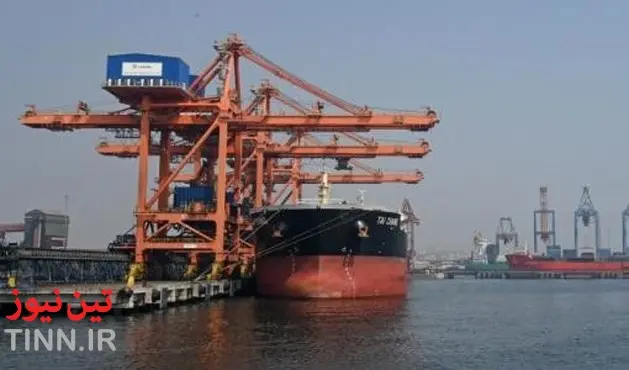
TIN news: We remain upbeat on the progression of planned upgrades at the Port of Durban given the strategic importance in maintaining South Africa’s strong logistics profile and meeting the import and export needs of the country’s economic hub Gauteng.
Lower than anticipated growth in trade volumes in South Africa – a result of slow economic growth and the persistent commodity price slump – have delayed momentum into Transnet’s ambitious infrastructural expansion plans at the Port of Durban, responsible for around 65% of the country’s bulk freight.
Nonetheless, we believe there is a strong business case for the parastatal to carry out more moderate upgrades at the port, particularly those necessary to meet the export and import needs of the country’s economic hub Gauteng and markets in southern Africa.
Transnet is eager to tackle congestion at the port in order to improve the ease of doing business, ensuring that South Africa sustains its strong logistics profile in Sub-Saharan Africa and remains cost-competitive globally. As noted by our Operational Risk team, congestion at the port is one of the main risks to investors, resulting in delays lasting from several hours to a few days. Transnet is also eager to increase the port’s capacity to accommodate liquid bulk shipments to avoid a shortage in refined fuels – particularly in Gauteng – and the subsequent increase in fuel import costs.
We remain upbeat on Transnet’s ability to execute its plans at the port, despite current market dynamics. It is in a fairly strong financial position (relative to its parastatal peers) to execute its plans and we maintain its manageable debt load will keep borrowing costs accommodative. Taking these factors into account, we expect port investment to provide critical support to overall construction industry growth in South Africa over our 10-year forecast period, expected to average annual growth of 2.7% in real terms.
Projects expected to enter construction in the short term and support growth over our medium-to-long-term outlook are focused on increasing the container capacity of the Port of Durban, from 3.9mn twenty-foot equivalent units (TEUs) to 4.6mn TEUs. Encompassing the Durban Container Terminal (DCT) and the Maydon Wharf, these include:
The extension of a portion of Salisbury Island at the Port of Durban into Pier 1 of the DCT to accommodate larger vessels, involving the construction of a widened and deepened entrance channel and deepened berths. Work is expected to begin in 2018 and conclude in 2023, raising capacity from the existing 700,000 TEUs to 2.4mn TEUs.
The widening of berths 203 to 205 at Pier 2 of the DCT to expand on the existing capacity of 2.9mn TEUs. Work is expected to commence in 2017 and conclude in 2022.
The expansion of a portion of Maydon Wharf into a new container terminal for smaller vessels, involving the reconstruction and deepening of six out of 15 berths in the precinct.
There are also projects focused on increasing the liquid bulk capacity at the port’s Island View precinct, by deepening existing berths and constructing a coastal terminal for the new multi-product pipeline to Gauteng, due to be fully complete by November 2016. Berths 1 and 2 have been earmarked for upgrading, while in July 2016 Transnet issued a request for proposal to develop a liquid bulk port terminal on a public-private partnership basis.