US airlines making historic progress to reduce passenger bumping
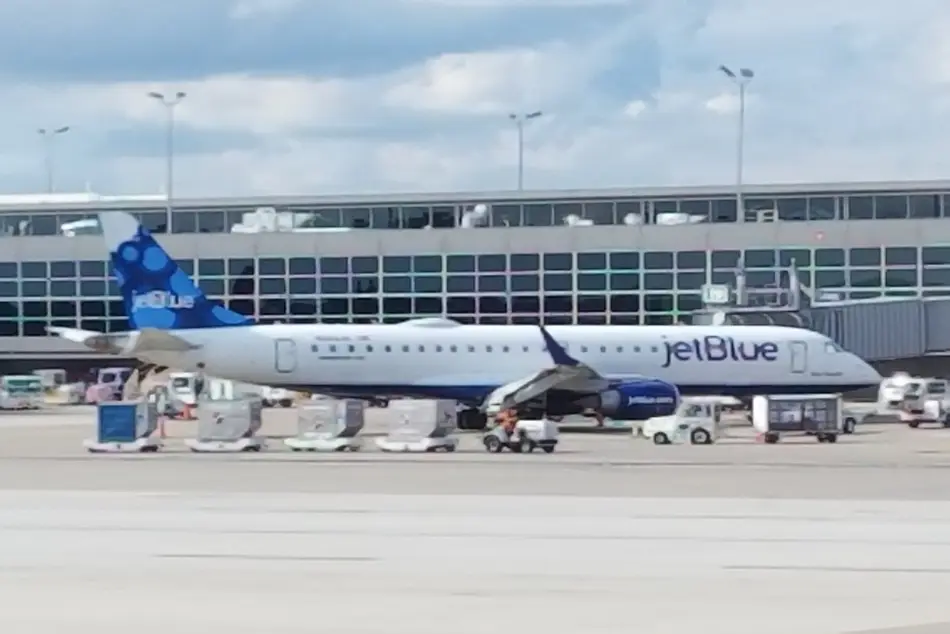
US airlines have appeared to have gotten the message that passengers were unhappy with being involuntarily bumped from their flights.
Following United Airlines’ public relations disaster in April when a passenger refused a request to leave his seat (i.e., being “involuntarily bumped”) and was subsequently dragged off the aircraft—an episode recorded by fellow passengers and viewed around the world—United and other US airlines reviewed and revised their overbooking policies.
As a result, the rate of passengers being “bumped” from US airlines during the 2017 first half fell to 0.52 involuntary departures per 10,000 passengers, the lowest first-half rate since the US Department of Transportation (DOT) began collecting denied boarding (DB) data in 1995.
As reported in DOT’s latest Air Travel Consumer Report, released Aug. 8, 17,330 passengers were involuntarily bumped during the first six months of 2017, down 13.9% compared to 20,128 in the first half of 2016. The 2016 1H was the previous historic low for passenger bumping, with 0.62 involuntary DBs per 10,000 passengers.
During the 2017 second quarter, 0.44 passengers per 10,000 were subject to involuntary DBs, or 7,764 out of 177.1 million passengers, which was the lowest quarterly rate since the 2002 third quarter.
Compared to the 2017 1Q, which was before the dragging incident occurred, the number of involuntary DBs per 10,000 passengers fell 29% in the second quarter, from 0.62 in January-March to 0.44 in April-June. The total number of involuntary DBs actually decreased, from 9,566 to 7,764, since the first quarter, an 18.8% decline.
This is even as the total number of enplaned passengers increased 14.1%, from 155.3 million in the first quarter, to 177.1 million in the second quarter.
As for United, year-to-date the Chicago-based carrier has the fifth-best record out of the 12 US airlines required by DOT to report monthly and quarterly operational data. United’s 1H 2017 rate totals 0.44 involuntary DBs per 10,000 passengers, equal to its rate for 1H 2016, when United had the fourth-best record. Between the two quarters in 2017, United has actually maintained the same level of involuntary DBs—0.44 per 10,000 passengers—and in the second quarter had the sixth best record, behind New York-based JetBlue Airways, Hawaiian Airlines, Atlanta-based Delta Air Lines, Utah-based SkyWest Airlines and Seattle-based Alaska Airlines.
Delta is at the top of the list so far in 2017, with 0.10 involuntarily DBs per 10,000 passengers; Florida-based ultra-low-cost carrier Spirit Airlines is at the bottom, with 1.06 involuntary DBs per 10,000 passengers.