Siemens & DB’s AutomatedTrain Showcases Driverless Future
Siemens and Deutsche Bahn’s (DB) joint AutomatedTrain project has reached a major milestone following the integration of automation technologies within a Mireo train.
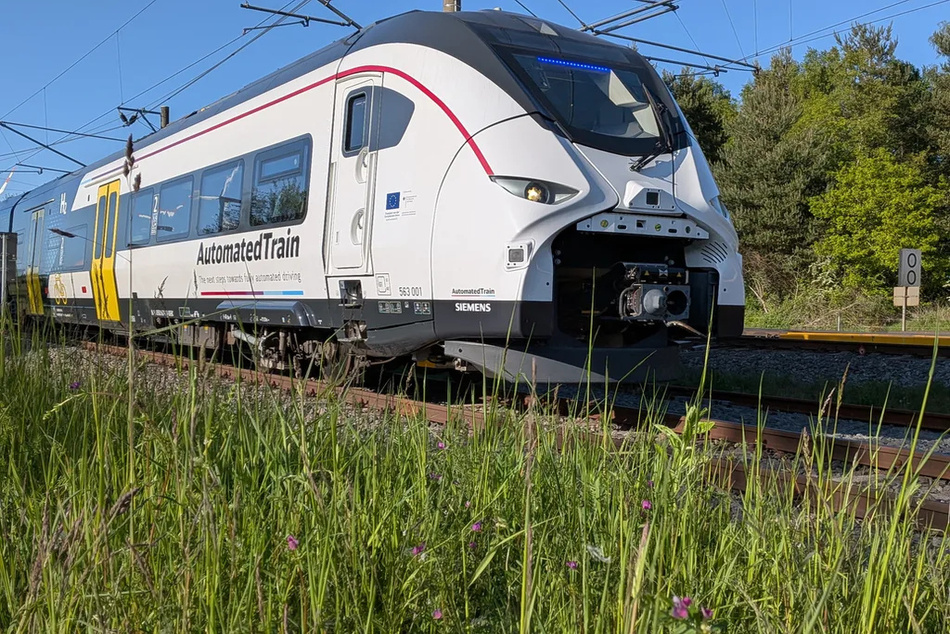
Siemens and Deutsche Bahn’s (DB) joint AutomatedTrain project has reached a major milestone following the integration of automation technologies within a Mireo train.
The integration has enabled both successful testing and demonstration of the technical feasibility of fully automated train deployment, as well as stabling operations.
During the testing process, the train is issued a direct command to start before preparing itself for autonomous operation. It then conducts all required self-tests, and subsequently carries out a driverless journey from its home depot to its starting station, independently detecting and navigating obstacles along the way.
Marc Ludwig, CEO of Rail Infrastructure at Siemens Mobility:, said:
AutomatedTrain demonstrates that fully automated driving in open rail systems is feasible. Together with our partners, we have developed the decisive technologies and successfully demonstrated them with our Mireo train.
This creates the technological foundation for the next generation of rail transport and marks a significant step forward in bringing automation to the railway.
The AutomatedTrain project aims to demonstrate fully automated train operation, from preparation and driverless travel to the automated stabling of the train, and is based on the interplay of Automatic Train Operation (ATO), signalling technology based on the European Train Control System (ETCS), intelligent vehicle control systems, and new environmental recognition technologies.
Utilising a digital map, as well as high-precision localisation, sensor systems detect obstacles on the track and enable the train to react automatically.
The main component of the solution is AVVO (Advanced Vital Vehicle Operation), a safety-related platform that handles selected safety-critical functions and supports the automated execution of operational processes. AVVO aims to connect all systems relevant to automated operation, controls functions such as vehicle preparation, direction of travel, and braking, monitors safe train movement, and ensures that the vehicle automatically transitions to a safe state in the event of any malfunction, as well as enabling secure communication with the control centre.
In addition to practical testing, the project has also involved simultaneous work with partners in order to develop both the requirements and a consistent architecture for future fully automated rail systems. These served as the basis for all technical solutions on the train, whilst simultaneous groundwork was laid for the transfer into standardisation and the subsequent approval of such technologies.
The research project as a whole forms part of the German Government’s economic stimulus package, and was co-funded by the European Union (German Recovery and Resilience Plan). It was devised with the aim of showing that fully automated driving in open rail networks is ‘no longer just a vision but can be technically realised’.
Johannes Steiniger, Parliamentary State Secretary at the Federal Ministry for Economic Affairs and Energy, said:
What we are seeing here is the future of mobility. Research is being carried out here into how fully automated trains can be deployed in the future.
Driverless train services offer opportunities – particularly in times of a skills shortage – to continue to operate rail routes reliably in the future and to deploy trains more flexibly. The project also demonstrates just how much promising and profitable work can emerge from Germany as a centre of research when industry, infrastructure companies and academia work together to shape the future.